See
Notice color, clarity, depth, and how the wine moves in the glass.
A growing library for tasting more thoughtfully, understanding place, serving wine confidently, and finding the language to share what you notice.
World vintage ratings on the 100-point scale, 1980 to 2024. Filter by country, jump by decade, hover any cell for the detail.
Ratings describe the overall quality of a vintage in a region — not any single wine. A weak year still produces excellent bottles from careful growers, and a great year does not rescue a bad one. Use it to frame a conversation, not to settle one.
Scroll the table sideways for more regions
95–100 exceptional · 90–94 outstanding · 85–89 very good · 80–84 good · 75–79 average · 70–74 fair · below 70 poor · “–” not rated or vintage not declared.
Compiled from the Robert Parker Wine Advocate Vintage Chart and the Wine Enthusiast Vintage Chart, 2026 edition.
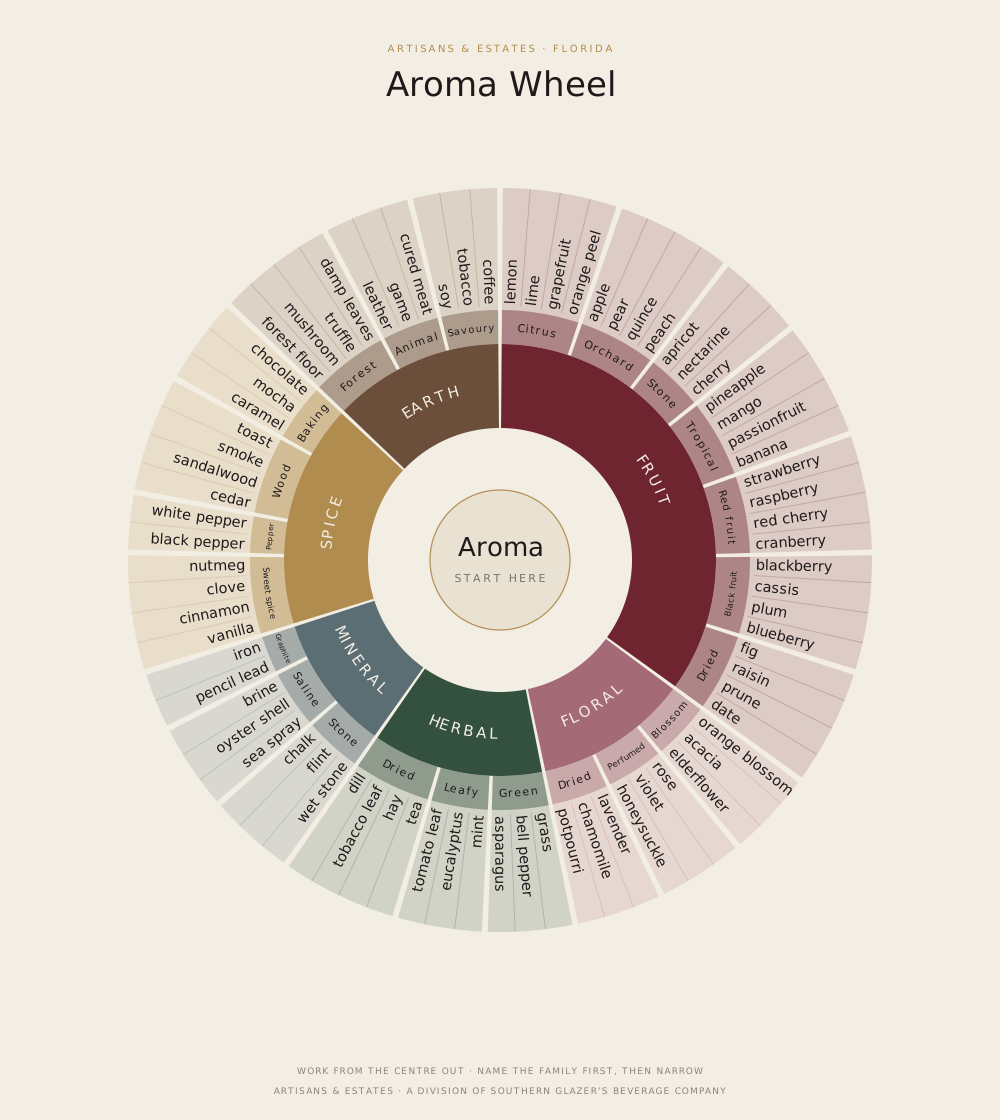
Citrus, orchard, stone, tropical, red, and black fruit.
Blossom, rose, violet, lavender, and dried flowers.
Fresh herbs, tea, grass, leaf, and savory tones.
Stone, chalk, saline, graphite, and earthy impressions.
Sweet spice, pepper, licorice, cedar, and toast.
Forest floor, mushroom, tobacco, leather, and game.
Circular flavour vocabularies came out of the brewing and Scotch industries. Ann Noble, a sensory chemist at UC Davis, published the first Wine Aroma Wheel in 1984, and it has shaped how the trade talks about wine ever since. The principle is simple: start broad, then narrow. “Fruit” is easier to agree on than “cassis”, and once you and the guest agree on the family, the specific note follows.
The wheel above is ours — six families, twenty-three groups, seventy-seven descriptors, drawn as vector so it stays sharp however far you zoom. Open it full size on a phone at the table, or print it for a pre-shift.
Our own vocabulary, not a reproduction. Dr Noble’s original Wine Aroma Wheel is a copyrighted work and can be bought from winearomawheel.com — worth owning if you train staff on it.
WSET — the Wine & Spirit Education Trust — teaches tasting through what it calls the Systematic Approach to Tasting: you look at the same things in the same order every time, so notes stay comparable from wine to wine and from one person to the next.
Appearance first — clarity, intensity, colour. Then the nose: whether the wine is clean, how intense it is, what the aromas actually are, and how developed they seem. Then the palate — sweetness, acidity, tannin, alcohol, body, flavour intensity, and the length of the finish. Conclusions come last, not first.
The discipline matters more than the vocabulary. Working in a fixed order stops you reaching a verdict off the first sniff, and it separates what you are actually sensing from what you already assume about the label. For our work there is one more step worth adding at the end: what the wine is for. A tasting note that doesn’t finish with “this belongs by the glass” or “this is the bottle for the steak table” hasn’t done its job — which is why our sheet ends there.
Notice color, clarity, depth, and how the wine moves in the glass.
Begin with broad aroma families before searching for individual notes.
Consider sweetness, acidity, tannin, alcohol, body, and flavor.
Pay attention to texture, balance, energy, and the shape of the wine.
Notice what remains, how long it lasts, and whether it invites another sip.
A blank sheet built for selling rather than for exams: structured tasting, ending in where the wine fits on a list and what you’d say at the table. The full Level 3 Systematic Approach to Tasting is published by WSET and is worth reading if you want the complete framework.
Longer growing seasons often preserve acidity and favor lifted aromatics, fine structure, and detail.
Elevation, exposure, and stressed soils can build concentration, structure, and a strong sense of site.
Greater heat can drive ripeness, body, generosity, and darker fruit expression.
Often associated with structure, savory tones, and a distinct mineral impression.
Fog, wind, and cool nights can slow ripening and protect freshness.
Tradition, regulation, varieties, and food culture shape regional identity alongside climate and soil.
Larry O’Brien, M.S., demonstrates proper use of the waiter’s knife—from foil and worm placement to leverage and a clean finish.
Nick Hetzel, M.S., demonstrates how to present, open, and serve sparkling wine safely—with control, confidence, and a gentle finish.
Craig Ellick demonstrates how to present a bottle with the label visible, confirm the producer and vintage, open it neatly, and complete service with confidence and care.
Florida menu pairings, by-the-glass ideas, banquet tiers, and focused category stories for restaurants, hotels, clubs, and retailers.
Explore buyer resourcesA password-gated library for sell sheets, shelf talkers, training cards, tasting mats, presentation decks, and account tools.
Enter rep resourcesTwo things change how a wine shows more than almost anything else on the list: how cold it is when it reaches the table, and how long it has had to open up.
Most restaurants serve whites too cold and reds too warm. A red at true room temperature in Florida is a red served at 75°F, which reads as flabby and hot. These are the working ranges.